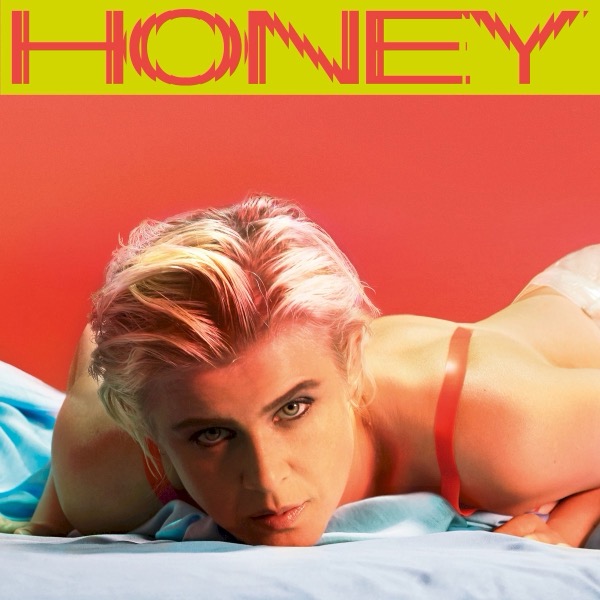
Beck started Colors with Greg Kurstin in 2013, before Morning Phase was even out, and he meant it to be his comeback: something bolder and more modern, he later said, than the quiet record that ended up coming first. Morning Phase won Album of the Year at the Grammys in February 2015, when Beck was already two years into its follow-up. Colors finally came out on 13 October 2017, on Fonograf and Capitol.
The wait was long and public. “Dreams” arrived in June 2015 as the first single; Beck said it began as heavy garage rock and drifted toward dance music. The album had been due in spring 2015, then the spring after. “Wow” followed in June 2016, with the album now dated 21 October, a date that slipped to November and then to spring 2017; by September 2016 “Up All Night” was already on the FIFA 17 soundtrack and in a Fossil smartwatch ad. Beck pointed to the long tour for Morning Phase, and told the Evening Standard that a celebratory album released as Donald Trump took office would have felt out of step.
The record is mostly the two of them. Kurstin had been Beck’s touring keyboardist on the Sea Change tour in 2002 and had since co-written and produced Adele’s “Hello”. In Kurstin’s Los Angeles studio they played nearly every instrument, in short sessions fitted around his other work and often months apart. Their joke title was Sgt Thriller. Beck described the goal as an experimental record still “beholden to some of the rules of pop”. Kurstin co-wrote and co-produced eight of the ten songs, “Wow” was made with Cole M.G.N., and Beck wrote and produced the closer, “Fix Me”, alone. Serban Ghenea, whose mixing credits include “Uptown Funk” and The Weeknd’s “Can’t Feel My Face”, mixed eight songs. The guests have small parts: Feist sings and Ilan Rubin drums on “I’m So Free”, Roger Joseph Manning Jr. adds backing vocals to four songs, and the strings were arranged by Beck and his father, David Campbell, who conducted them.

“Wow” began as a freestyle. By Beck’s account he was working on another song, maybe “Dreams”, had an idea for a flute beat and picked up the microphone; he never meant to release the result, and the label chose it as a single. The title track runs on a pan-flute riff that NME and the Observer both tied to Men at Work, “Dear Life” on a Beatles-style piano line, and “No Distraction”, which critics placed near the Police, is about the pull of phones and screens. The “Dreams” on the album is a new mix; the 2015 single appears only as a bonus track on digital editions. In December 2017 “Up All Night” became Beck’s third No. 1 on Billboard’s Alternative Songs chart, his first since “E-Pro” in 2005.
Critics split on what the polish cost him. In Rolling Stone, Will Hermes praised its skewed pop craft and called it a smart attempt to put his own mark on modern pop, and NME’s Thomas Smith counted it among his most enjoyable records, frank about wanting chart hits. The Guardian found some of his best and worst songs side by side. Others could not find that mark. Pitchfork’s Jillian Mapes found its oddities trailing pop fashion instead of setting it, with “the precise Beck-ness” somewhat absent; the A.V. Club’s Josh Modell thought it best at its silliest and its saddest, and weakest in between; and The Line of Best Fit had him studying artists who once took their cues from him. It opened at No. 3 on the Billboard 200, and in February 2019 it won the Grammys for Best Alternative Music Album and Best Engineered Album, Non-Classical.
The awards went to real strengths. Reviews on both sides credited the craft, “Dreams” and “Wow” were singled out again and again, and the engineering Grammy went to sixteen engineers and mastering engineers, Beck and Kurstin among them. But the record all that care produced belongs to 2017 more than to Beck. Critics kept reaching for other people’s hits to describe it: in “Up All Night” alone they found The Weeknd, Justin Timberlake and Maroon 5. For most of his career Beck was the yardstick other records were held against. Here he follows the house style of the year, bright, buffed and anonymous. The two songs with the most of him in them, “Wow” and “Fix Me”, are the two Kurstin did not co-write.
Watch and listen
Players only load when you press play. Their providers may set cookies.